- Challenge
- Desire to evaluate and manage ESG performance across group suppliers
- Increased workload for data aggregation driven by a growing, increasingly complex list of supply chain survey items
- Operational vulnerabilities and heavy onboarding burdens caused by individualized ESG evaluation workflows prone to disruptions during personnel transfers
- Solution
- ASUENE: carbon accounting platform for streamlined greenhouse gas emissions visualization
- ASUENE ESG (now ASUENE SUPPLY CHAIN): cloud platform for comprehensive supplier sustainability assessments
- Impact
- Streamlined feedback loops facilitated by sharing identical, visualized dashboard data directly with suppliers
- Enhanced disclosure credibility through objective ESG evaluations aligned with international initiatives rather than proprietary internal standards
- Heightened sustainability awareness both internally and among suppliers driven by the strategic utilization of visualized ESG data
Evaluating and Managing ESG Performance Across the ITO EN Group Supply Chain
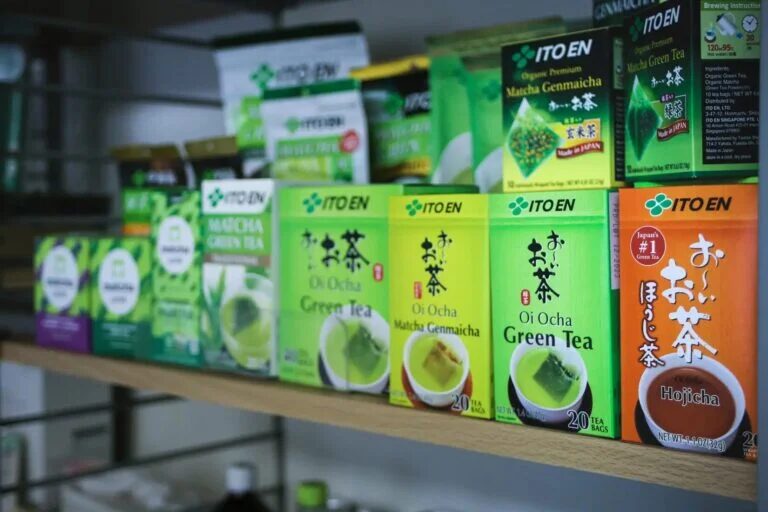
ITO EN, LTD. is a prominent beverage manufacturer specializing in green tea products, alongside a diverse portfolio that includes barley tea, coffee, and vegetable juices. Celebrating its 60th anniversary in 2024, the company operates a robust B2C model, delivering beverages directly to consumers via convenience stores and vending machines, as well as a B2B model wholesaling matcha ingredients to food manufacturers. The group also includes Tully’s Coffee Japan Co., Ltd., expanding its operations into the food and beverage service sector.
The flagship brand, Oi Ocha, reflects a rigorous commitment to quality control and flavor, starting directly from the cultivation of tea leaves. ITO EN has consistently driven industry innovation, pioneering the first-ever PET-bottled green tea and introducing hot-beverage-compatible PET bottles to match evolving consumer needs.
Operating on a fabless manufacturing model (where product planning and development are handled internally while actual production is outsourced), ITO EN maintains relationships with numerous domestic and international suppliers. As a Prime-listed corporation, the company recognized the necessity of conducting comprehensive supply chain assessments to monitor not only CO2 emissions but also broader ESG factors, including social responsibility and human rights.
Approximately five years ago, the company initiated procurement-policy-based assessments, conducting annual surveys on environmental and human rights issues. The production department distributed Excel-based questionnaires to suppliers and collected responses via email. However, this methodology relied on internal judgment criteria, lacking objective evidence and presenting data-integrity risks for external disclosures.
Furthermore, the surveys grew increasingly complex over time, driving up the administrative burden of data aggregation. Onboarding new supplier personnel following organizational shifts also presented a recurrent operational bottleneck, highlighting the clear need for a centralized platform equipped with built-in guidance and explanations.
Integrating Carbon Accounting and ESG Data to Drive Next Actions

Management initially consulted with ASUENE Inc. regarding its carbon accounting service, ASUENE, and subsequently learned about ASUENE ESG (now ASUENE SUPPLY CHAIN) during consultations. The discussions covered the comprehensive ecosystem of ASUENE services, including calculation support for Product Carbon Footprint (CFP) metrics.
Seeking a solution capable of managing ESG evaluations and supplier performance within supply chain management (SCM), ITO EN evaluated platforms from three different providers. While alternative services kept carbon accounting and ESG evaluations isolated, the ASUENE ecosystem offered seamless mutual data integration.
The deciding factor was the ability to link supply chain survey responses directly with Scope 3 Category 1 emissions calculations (purchased goods and services). For manufacturing companies, Scope 3 Category 1 represents a major share of total emissions; streamlining data collection and system integration in this specific area provided a significant strategic advantage.
As the implementation is in its early stages, the environmental promotion team plans to design and distribute new questionnaires to suppliers. The team will leverage the comprehensive customer support framework of ASUENE ESG (now ASUENE SUPPLY CHAIN) to manage the formulation and collection phases efficiently.
Mitigating Risk and Securing Business Sustainability Through Comprehensive Supply Chain Assessments
The deployment of ASUENE ESG (now ASUENE SUPPLY CHAIN) enables both the company and its suppliers to view identical, visualized datasets on a shared dashboard, simplifying the feedback process. Because suppliers gain clear visibility into their status via intuitive charts, they can easily identify areas for improvement across specific environmental, social, and governance criteria. The resulting feedback serves as a foundation for determining concrete next actions.
Previously, data collected via Excel was evaluated using internal benchmarks. Moving forward, the platform allows for objective supplier evaluations aligned with global standards, such as the United Nations Global Compact. Retailers and distributors frequently inquire whether products are manufactured with proper environmental and ESG considerations; consequently, the company intends to communicate its progress and current market positioning internationally using these global metrics.
Furthermore, given the high level of interest in ESG topics among contemporary students, management plans to utilize ASUENE ESG (now ASUENE SUPPLY CHAIN) data for recruitment purposes. Disclosing evidence-backed ESG scores on the corporate website will reinforce the authenticity of the corporate mission and messaging. In addition to external communications, the data will support internal awareness initiatives. While ESG encompasses more qualitative dimensions than carbon accounting, visualized metrics will help embed these concepts into corporate culture.
The core business depends entirely on tea farmers who cultivate raw ingredients. Facing a structural decline in the number of tea farmers, the company must establish support mechanisms and highly efficient production structures. This necessitates careful attention not just to environmental factors, but also to social and governance factors (such as working environments and human rights) across all suppliers and group companies.
Guided by the management philosophy of “Always Putting the Customer First,” ITO EN prioritizes human connections, defining “customers” broadly to include consumers, shareholders, distributors, suppliers, financial institutions, and local communities. Improving working environments for suppliers and managing comprehensive supply chain risks directly strengthens sustainable business operations. By accelerating group-wide ESG initiatives, the organization aims to contribute actively to the realization of a sustainable society.
(Note: The information above reflects the time of the original interview.)
ITO EN, LTD.
Type of Business: Manufacturing and sale of tea products and soft drinks
Address: Tokyo, Japan
Number of employees: 7,929
Under the ITO EN Group management philosophy of “Always Putting the Customer First,” the company pursues its social mission to contribute to healthy, affluent lifestyles and a sustainable society. It delivers the flavor and value of Japanese tea to consumers across generations. Built on robust partnerships established since its founding, the company continues to support the health and well-being of customers in Japan and around the world.