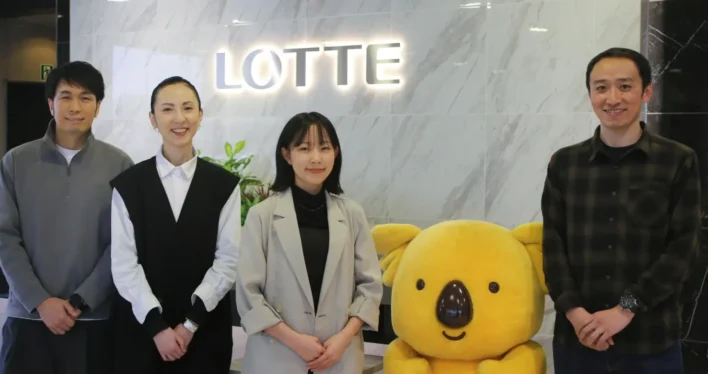
Lotte Co., Ltd.
Type of Business: Manufacturing (confectionery, ice cream, health food, and sundries)
Address: Shinjuku Ward, Tokyo
Number of employees: Number of employees: 7,375 (as of March, 2023)
Founded in 1948, Lotte is dedicated to enriching the lives of people around the world through the manufacturing and sale of confectionery and ice cream products. Guided by the core principles of “User-Oriented,” “Originality,” and “Quality,” they continually strive to deliver beloved products that bring joy to their customers.
- Challenge
- Inefficiency and inaccuracies in group-wide CO2 emissions calculations due to a heavy reliance on manual data entry within Excel
- Inability to fully capture the positive environmental impact of supplier sustainability initiatives due to an exclusive reliance on secondary data estimations for Scope 3 emissions
- Solution
- ASUENE: Decarbonization platform
- Impact
- Reduced data collection and calculation burdens alongside enhanced data accuracy to eliminate manual processing vulnerabilities
- Empowered staff across multiple locations to input data easily through a user-friendly interface, facilitating platform adoption
- Efficient collection and organization of primary data to establish a transparent overview of emissions reduction progress
Complex data collection and input errors previously created significant obstacles in corporate CO2 emissions calculations

Lotte Co., Ltd. was founded in 1948 as a confectionery and ice cream manufacturer. The company’s name originates from “Charlotte,” the beloved character in Johann Wolfgang von Goethe’s classic novel, The Sorrows of Young Werther, which was a favorite of the founder. The corporate slogan, “Beloved by your mouth,” embodies the aspiration to be a deeply cherished enterprise, much like the eternally beloved Charlotte.
Founded in the postwar era, Lotte has continually strived to differentiate itself from established confectionery companies. Since inception, the organization has embraced three core values: “User-Oriented,” “Quality,” and “Originality.” The company regularly drives new value creation through “Lottenovation,” an internal commitment to continuous innovation. This spirit led to the development of unique, market-defining products such as “Yukimi Daifuku” (ice cream wrapped in mochi) and “Choco Pie” (a shelf-stable cake).
The flagship brand, “Ghana,” celebrated its 60th anniversary in 2024. At the time of its launch, chocolate bars typically featured brown packaging, but Lotte boldly introduced Ghana in vibrant red packaging, demonstrating its commitment to originality. Thanks to this forward-thinking approach, the company has grown to hold leading market shares in Japan, ranking third in biscuits, second in chocolate, and first in ice cream.
Management believes that sustainability initiatives, including precise CO2 emissions calculation and disclosure, are essential for the continued growth of the business. While listed companies in Japan are obligated to engage in and disclose such initiatives through the Corporate Governance Code, Lotte is not publicly listed. Nevertheless, the company proactively embraces sustainability to appropriately address long-term business risks and opportunities. The organization recognizes the urgency of decarbonization, viewing it as a critical operational issue directly linked to future financial impacts, such as carbon pricing, and reputational risks.
Previously, Lotte calculated Scope 1, 2, and 3 emissions using Excel, but this approach presented numerous operational challenges. Collecting vast amounts of energy consumption and invoice data from each business location, including overseas group companies, was highly time-consuming. Furthermore, a complex supply chain involving in-house production, partner factories, wholesalers, and retailers made emissions calculations extremely labor-intensive, exceeding the capacity of the Sustainability Promotion Department alone. Relying on secondary data estimations also meant that the company could not accurately reflect the actual emissions reduction efforts of its suppliers. To address these obstacles, management began exploring the utilization of a dedicated CO2 emissions visualization service.
The combination of a clear, easy-to-navigate interface and quick, helpful support from ASUENE’s consultants made it the obvious choice

Lotte first learned about ASUENE through a financial institution while researching automated CO2 emissions calculation services. After comparing and evaluating several providers, ranging from startups to large enterprises, the company ultimately selected ASUENE due to its intuitive user interface. Because multiple staff members across various factories and offices use the service for daily data entry, user-friendliness and clarity were crucial factors in the decision-making process. ASUENE also offered comprehensive functionality for comprehensive emissions calculations and possessed a strong track record of successful enterprise implementations, demonstrating its leadership in the market.
The company has been consistently impressed by the prompt and attentive support provided by ASUENE’s consulting team. Whenever staff members have questions about utilizing the platform, they receive immediate, step-by-step guidance over the phone. The consultants are also highly receptive to operational feedback, quickly evaluating and deploying system updates based on corporate suggestions. Given the transition from the inherent flexibility of Excel, having a highly responsive team to consult regarding desired features has proven invaluable.
The CSV file upload function has been particularly beneficial. Lotte currently collects data from multiple locations and imports it into ASUENE via CSV files. With ASUENE, team members at different locations can view data in real time, which is expected to further motivate employees to engage actively in decarbonization efforts.
Expanding Data Centralization and Company-Wide Collaboration
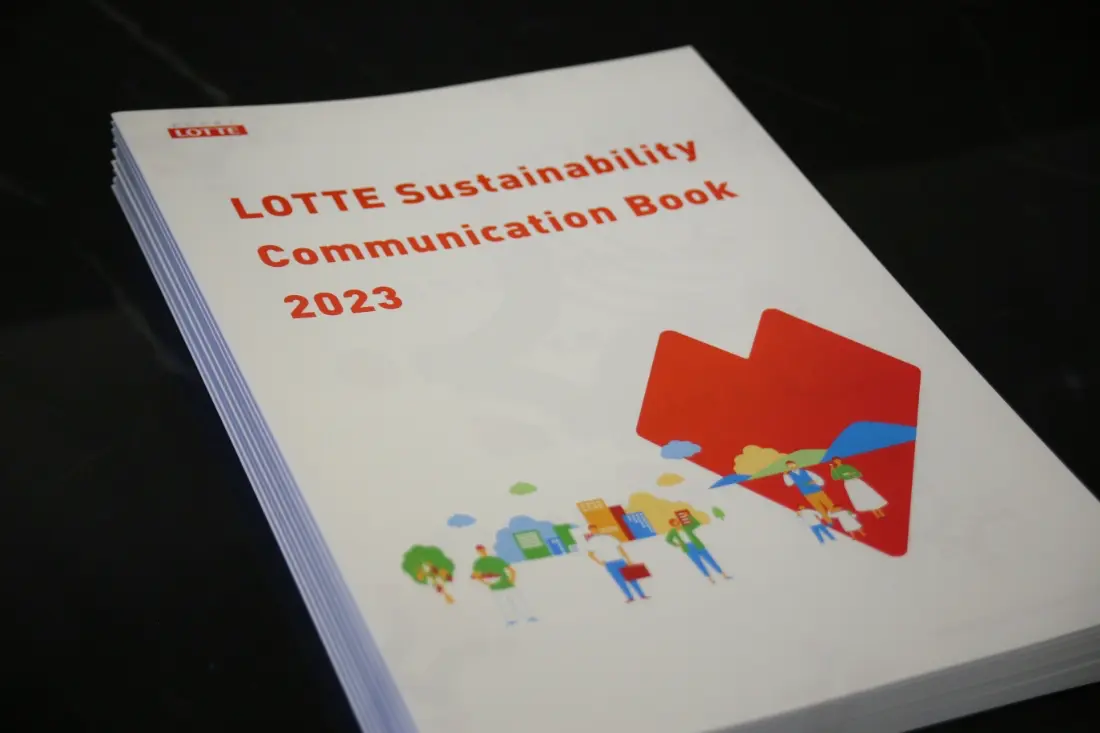
Moving forward, Lotte aims to leverage the time saved through streamlined calculations to collect primary data for key Scope 3 categories. The company also plans to establish an expanded system for Scope 1, 2, and 3 calculations that actively involves all employees, including those in production and corporate planning departments, ensuring complete information transparency and company-wide collaboration.
Furthermore, ASUENE allows the organization to manage not only CO2 emissions but also other designated environmental metrics, such as water usage and waste generation. Lotte intends to fully utilize the platform to centrally manage all sustainability-related data, reinforcing the principle that sustainability initiatives are crucial for achieving sustained corporate growth.
Currently, Lotte aims to reduce Scope 1 and 2 CO2 emissions by at least 23% by fiscal 2028 compared to fiscal 2019 levels. This target, based on the company’s own calculations, was approved by the Science Based Targets initiative (SBTi) in May 2022. Furthermore, the company is actively pursuing decarbonization initiatives with the ultimate goal of achieving complete carbon neutrality by fiscal 2050. Solid progress has been made through company-wide energy conservation efforts and departmental emissions reduction initiatives.