Pure AV
Type of Business: Technology
Address: Preston, United Kingdom
Number of employees: 110
Pure AV designs and builds digital communication environments for businesses, universities, and public sector organizations. By integrating audio visual equipment, web conferencing systems, and other technologies, the company delivers end-to-end solutions from system design and installation to ongoing operational support. With strong technical capabilities and a reputation for reliability, Pure AV serves a wide range of needs across its three sites in the UK.
- Challenge
- No unified system to integrate and track Scope 1–3 emissions
- Site-by-site data formats made accurate, consolidated measurement difficult
- Required to develop and execute a credible Carbon Reduction Plan for public procurement compliance
- Solution
- ASUENE – Decarbonization platform and SX consulting services
- Created a Carbon Reduction Plan supported by actionable, realistic reduction recommendations
- Impact
- Centralized emissions data from all three sites, enabling accurate, transparent calculations
- Clear prioritization of reduction areas empowered teams across the organization to advance concrete actions.
- Strengthened readiness for external assessments, improving trust and accountability with customers and stakeholders

Accurate Carbon Measurement Required for Compliance and Transparent Disclosure
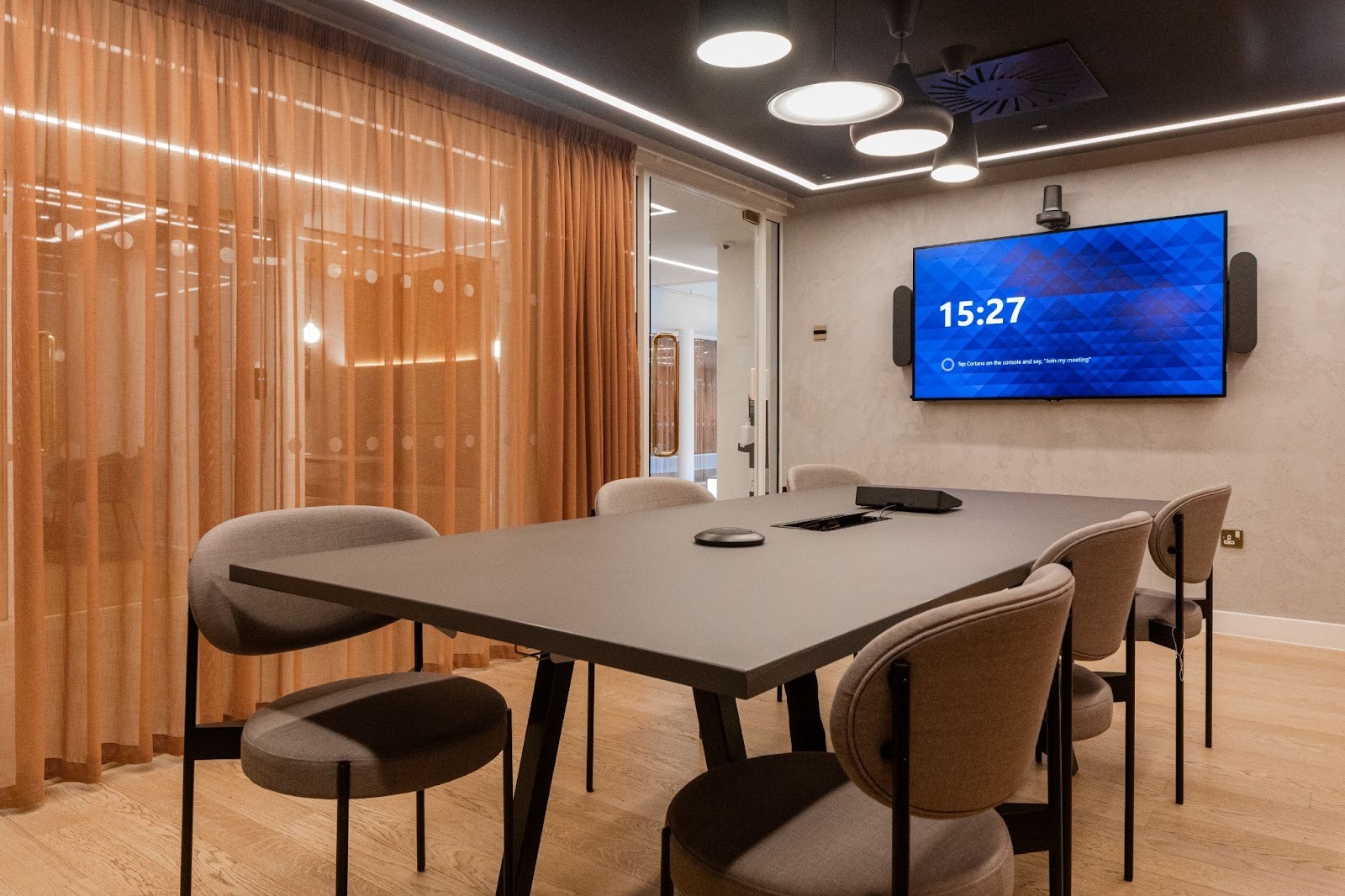
Headquartered in Preston, UK, Pure AV specializes in unified communications, integrating audiovisual systems with email, chat platforms such as Slack, and web conferencing tools like Zoom into a single, seamless environment. Since its founding in 2003, the company has expanded to three sites, Dunstable, Preston, and Halifax, supporting organizations across corporate, education, public sector, and healthcare settings. With end-to-end capabilities spanning design, programming, installation, and ongoing support, Pure AV delivers solutions that enhance the value of physical spaces and transform the way people work and learn. Its business requires a high level of quality and reliability, driven by the advancement of AV technologies and the widespread adoption of online communication.
Pure AV places decarbonization at the core of its management strategy, aiming to create a positive impact for customers, local communities, and its supply chain. Achieving this requires a precise understanding of its environmental footprint and the ability to operate in a more sustainable manner. In particular, compliance with the UK government’s Carbon Reduction Plan requirements, outlined in Policy Procurement Notice 06/21, made accurate GHG measurement and the development of reduction plans essential for maintaining business continuity and competitiveness.
However, several challenges stood in the way of advancing decarbonization. One of the most significant was establishing a structure that would allow the organization to present accurate emissions data and drive reduction efforts across the company. Emissions-related information was spread across multiple departments, and although the finance team coordinated data collection, a more integrated, cross-departmental framework was needed. Strengthening this horizontal collaboration still remains as a key factor in achieving the company’s sustainability goals.
Managing emissions measurement across all three sites also required transparency and data consistency. Because each emissions category involved different departments, consolidating data into a single measurement process placed a considerable burden on the organization. As a result, it was difficult to gain a clear view of total emissions or their breakdown, making it challenging to allocate time and resources toward identifying and planning meaningful reduction measures.
Flexible UK-Ready Support and an Intuitive UI Were Key to Adoption

We first learned about ASUENE through a decarbonization proof-of-concept project conducted within the Ricoh Group, of which we are a member. As part of Ricoh’s efforts to evaluate a group-wide emissions management framework, we had the opportunity to test ASUENE’s platform during the project.
What stood out most during the initial briefing was the platform’s clarity and the transparency of its measurement logic. Its well-structured design, covering Scope 1–3, the organization of input data, and the step-by-step flow from data entry to emissions measurement, made it easy to understand and suitable for a company like ours operating multiple sites. We were also impressed by the dashboard’s visual usability, which allows us to grasp performance trends at a glance.
We also required support for UK-specific unit conversions (such as miles to kilometers and gallons to liters). ASUENE responded quickly and flexibly to these needs, offering updates and adjustments without delay. This responsiveness gave us strong confidence in moving forward with implementation.
Furthermore, ASUENE provided practical guidance for shaping our net-zero strategy, such as which targets we should set, by when, and which emissions categories should be prioritized for reduction. This level of support has been extremely valuable as we accelerate our decarbonization initiatives.
As we begin our sustainability journey in earnest, ASUENE has become an indispensable partner for our organization.
Working with ASUENE on Our Journey from Goal Setting to Action Toward 2040 Net Zero

We have set an ambitious goal of achieving net zero by 2040. One of our key focus areas is reducing emissions associated with transportation and logistics. While we have already introduced hybrid and electric vehicles into our fleet, we plan to further accelerate the transition to full electrification. In line with this, we are also considering the installation of EV charging infrastructure to create an environment that supports low carbon mobility across the company. Improving the overall efficiency of our logistics operations, such as optimizing delivery routes and consolidating shipments, will also remain an important priority.
On the energy side, our Dunstable site already operates on 100% renewable electricity, and we plan to complete the transition to renewable energy at the remaining two sites by 2026. We are also reducing operational energy consumption through measures such as LED lighting and the installation of occupancy sensors.
We are equally focused on reducing commuting related emissions. For example, we plan to promote greater use of the UK government’s “Cycle to Work Scheme,” which helps employees purchase bicycles and encourages low carbon commuting options.
ASUENE’s support plays a critical role in advancing these initiatives. Their data driven guidance, such as identifying which categories require reductions, how much reduction is needed, and by when, has been invaluable in shaping our long term decarbonization strategy. In addition, being able to clearly communicate our emissions data and reduction plans has strengthened transparency with customers and further reinforced the foundation of our sustainability efforts.
Going forward, we aim not only to manage GHG emissions from our operations but also to build a structure where each site and department can proactively contribute to reducing environmental impact. By strengthening this internal engagement and extending positive impact to our customers, supply chain partners, and local communities, we will continue to fulfill our responsibilities as a sustainable business.