- Article Summary
-
Introduction
Driven by the rapid adoption of cloud computing and artificial intelligence, data center construction in the United States has accelerated significantly. Data centers house servers, networking equipment, cooling systems, backup generation and other infrastructure required to ensure the reliable operation of digital services.
As of early 2026, the United States hosts more than 3,900 data centers, representing roughly 37 percent of the global total. Large-scale hyperscale facilities are concentrated in a limited number of regions, with the top 10 states accounting for approximately 60 percent of all facilities nationwide. Virginia, Texas and California are among the most prominent hubs.
The scale of expansion has implications beyond individual development projects. Energy policy, land-use planning and statewide economic strategy are increasingly linked to decisions about how these facilities are powered and sited.
Data center locations across the U.S.
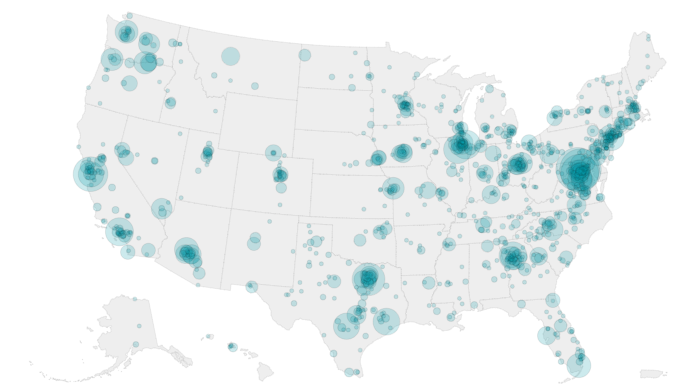
Source: World Resources Institute, “From Energy Use to Air Quality, How Data Centers Affect US Communities”
Data Center Energy, Water and Climate Impacts
The multiplication of data centers is reshaping local energy systems, water resources and land use patterns. The impacts are measurable and, in many cases, substantial.
Rising Electricity Demand
Modern AI-focused data centers can consume as much electricity as 100,000 households. Some of the largest facilities under development are expected to use up to twenty times that amount.
Research from Lawrence Berkeley National Laboratory indicates that data centers could account for up to 12 percent of total U.S. electricity consumption by 2028. Separate analysis from Grid Strategies estimates that as much as 90 gigawatts of new data center load could come online by 2030.
Meeting this demand requires expansion of generation, transmission and distribution infrastructure. In 2025, more than $60 billion in electricity rate increases were approved across the country, with average retail electricity prices rising by nearly 10 percent compared to the previous year.
Water Use and Resource Constraints
Data centers rely heavily on water for cooling. Mid-sized facilities may use up to 300,000 gallons per day, while large facilities can consume as much as 5 million gallons daily.
Estimates suggest that by 2028, AI-related data centers in the United States could require up to 32 billion gallons of water annually, equivalent to the indoor water use of roughly 360,000 households.
Approximately two-thirds of data centers built or under development since 2022 are located in water-stressed regions. In such areas, water availability has become a central consideration in permitting and planning decisions.
Air Quality and Climate Implications
Many facilities rely on natural gas-fired generation for routine operations and diesel generators for emergency backup. Diesel generators can emit between 200 and 600 times more nitrogen oxides than natural gas plants.
In Virginia, one analysis estimated that limited use of backup generators could be associated with nearly $300 million in annual public health costs. The interaction between energy reliability and environmental impacts is therefore a recurring policy issue.
Land Use and Environmental Justice
The average data center site in 2024 covered approximately 224 acres, representing a 144 percent increase since 2022. Some hyperscale campuses exceed 1,000 acres.
Concerns have been raised about the conversion of agricultural land and the siting of facilities in areas already facing environmental burdens. These patterns have prompted closer scrutiny of zoning practices and community engagement processes.
Governance Tools to Manage Impacts
State and local governments have begun implementing policy tools aimed at managing these impacts.
Electricity Regulation
• Creation of dedicated rate classes for large energy users
• Cost-recovery safeguards to prevent cost shifts to other ratepayers
These measures are designed to ensure that infrastructure investments driven by large loads are appropriately allocated.
Water Protection
• Water-use monitoring and public disclosure
• Drought contingency planning
• Use of reclaimed wastewater where feasible
Water oversight mechanisms are increasingly embedded into siting and planning requirements.
Air and Emissions Oversight
• Emissions review during permitting
• Disclosure of on-site power strategies
• Consideration of cleaner alternatives such as battery storage
Permitting processes are incorporating evaluation of environmental and health impacts alongside reliability considerations.
Policy Approaches in Key States
States with significant concentrations of data centers have adopted distinct regulatory approaches shaped by their policy priorities.
Virginia
As the largest data center hub in the world, Virginia has developed specialized regulatory tools. State regulators have introduced large-load tariffs and contractual commitments intended to reduce financial risk to existing ratepayers. Proposed and enacted measures also require detailed water consumption estimates during planning and zoning processes.
Regulatory authorities direct utilities to model data center load growth separately in integrated resource plans, enabling clearer assessment of reliability and infrastructure impacts.
Texas
Texas has prioritized grid reliability in response to rapid load growth. Legislation enacted in 2025 expanded oversight of large loads and requires curtailment during electric system emergencies to maintain grid stability.
Extended interconnection timelines have encouraged operators to pursue on-site generation under Bring Your Own Generation models, particularly using natural gas. These strategies are viewed as a means to secure timely power supply within the state’s regulatory framework.
California
California places strong emphasis on alignment with greenhouse gas reduction goals. Legislative proposals would require new large-load facilities to procure clean energy sufficient to meet incremental demand or demonstrate that their operations will not impede statewide emissions targets.
Consumer protection considerations are also reflected in rate design and regulatory review processes.
Conclusion
The rapid growth of data centers in the United States is influencing electricity systems, water resources, land use and environmental policy. States are responding through targeted regulatory adjustments that address cost allocation, grid reliability and alignment with climate objectives.
Differences among leading states illustrate how policy priorities shape regulatory design. As federal regulatory developments continue to evolve, the balance between state and federal authority may shift. For developers, operators and investors, understanding state-level policy frameworks is becoming an essential component of strategic planning in the data center sector.
Why Work with ASUENE Inc.?

ASUENE is a key player in carbon accounting, offering a comprehensive platform that measures, reduces, and reports emissions. The company serves over 10,000 clients worldwide with an all-in-one solution that integrates GHG accounting, ESG supply chain management, a Carbon Credit exchange platform, and third-party verification.
ASUENE supports companies in achieving net-zero goals through advanced technology, consulting services, and an extensive network.