- Article Summary
-
Introduction
Climate-related financial disclosure has rapidly become a core element of global sustainability governance. While corporate climate reporting has advanced significantly through frameworks such as TCFD and IFRS Sustainability Disclosure Standards, comparable disclosure by governments has remained fragmented and inconsistent. Public sector entities face climate risks that directly affect fiscal stability, public investment, and long-term economic resilience, yet until recently there has been no global baseline standard tailored to these realities.
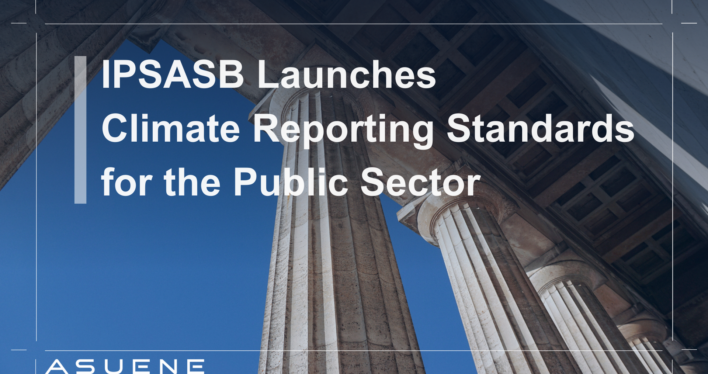
Against this backdrop, the International Public Sector Accounting Standards Board has launched its first climate-related sustainability reporting standard. IPSASB SRS 1 Climate-related Disclosures represents a major step toward integrating climate risk into public sector financial reporting and decision-making. By establishing a globally consistent framework for public sector climate disclosures, the standard aims to improve transparency, comparability, and accountability across jurisdictions.
Overview of the IPSASB Climate Reporting Standard
IPSASB SRS 1 is the inaugural sustainability reporting standard designed specifically for public sector entities, including national governments, subnational authorities, and other public bodies that prepare general purpose financial reports. The standard responds to growing demand from sovereign bond investors, credit rating agencies, multilateral institutions, and citizens for clearer information on how climate change affects public finances.
The development of the standard followed a multi-year consultation process initiated after calls from institutions such as the World Bank for stronger sovereign climate and nature risk disclosure. IPSASB determined that climate-related risks warranted priority treatment and advanced the project at an accelerated pace. The result is a standard that reflects the unique mandates of the public sector while maintaining interoperability with private sector disclosure frameworks.
Crucially, IPSASB structured its climate reporting work into two phases. The newly launched standard focuses on climate-related risks and opportunities arising from a public sector entity’s own operations. A second standard addressing climate-related public policy programs is under development and will be issued separately.
Disclosure Framework and Key Requirements
IPSASB SRS 1 is closely aligned with IFRS S2 Climate-related Disclosures and builds on the four-pillar structure originally established by the Task Force on Climate-related Financial Disclosures. This alignment enhances consistency between public and private sector reporting while incorporating public sector–specific adaptations.
Public sector entities applying the standard are required to disclose material climate-related risks and opportunities that are reasonably expected to affect long-term fiscal sustainability. Disclosures are organized under governance, strategy, risk management, and metrics and targets, ensuring a comprehensive view of how climate considerations are embedded within public financial management.
The standard also establishes clear expectations for greenhouse gas emissions reporting. Entities are required to disclose Scope 1, Scope 2, and Scope 3 emissions using the Greenhouse Gas Protocol as the default methodology. Recognizing data and capacity constraints, IPSASB provides transition relief that allows entities to defer Scope 3 emissions disclosure for the first three reporting periods.
| Disclosure Area | Core Requirements |
|---|---|
| Governance | Oversight of climate risks and responsibilities within public institutions |
| Strategy | Identification of climate risks and opportunities affecting fiscal sustainability |
| Risk Management | Processes for identifying, assessing, and managing climate-related risks |
| Metrics and Targets | Emissions data, climate-related targets, and performance indicators |
Implications for Public Sector Entities and Investors
The introduction of IPSASB SRS 1 has significant implications for how climate risk is understood and priced in public finance. Governments face exposure to physical climate risks, transition risks, and climate-related liabilities that can affect debt levels, public spending priorities, and long-term economic growth. Standardized climate disclosures provide a structured way to surface these risks within financial reporting systems.
For sovereign bond investors and credit analysts, the standard improves access to decision-useful information that supports more accurate risk assessment. Consistent disclosures enhance comparability across countries and reduce reliance on ad hoc or incomplete data sources. Over time, this may influence sovereign credit evaluations and the cost of capital for governments.
From a governance perspective, IPSASB SRS 1 strengthens accountability by linking climate risk management directly to general purpose financial reports. This integration signals that climate considerations are no longer peripheral sustainability topics, but core elements of public financial stewardship.
Conclusion and Next Steps
The launch of IPSASB SRS 1 Climate-related Disclosures marks a turning point for public sector climate reporting. By establishing the first global climate disclosure standard for governments, IPSASB has laid the foundation for more transparent, comparable, and decision-useful reporting on climate-related fiscal risks.
With final publication scheduled for early 2026 and implementation support already underway, governments now face the task of building internal capacity, data systems, and governance structures to meet the new requirements. The forthcoming second-phase standard on climate-related public policy programs will further expand the scope of public sector climate accountability.
As climate risks increasingly shape economic and fiscal outcomes, IPSASB SRS 1 positions climate disclosure as an essential component of modern public financial management. For policymakers, investors, and citizens alike, the standard represents a meaningful step toward aligning public finance with the realities of a changing climate.
Why Work with ASUENE Inc.?

ASUENE is a key player in carbon accounting, offering a comprehensive platform that measures, reduces, and reports emissions. The company serves over 10,000 clients worldwide with an all-in-one solution that integrates GHG accounting, ESG supply chain management, a Carbon Credit exchange platform, and third-party verification.
ASUENE supports companies in achieving net-zero goals through advanced technology, consulting services, and an extensive network.