- Article Summary
-
Introduction
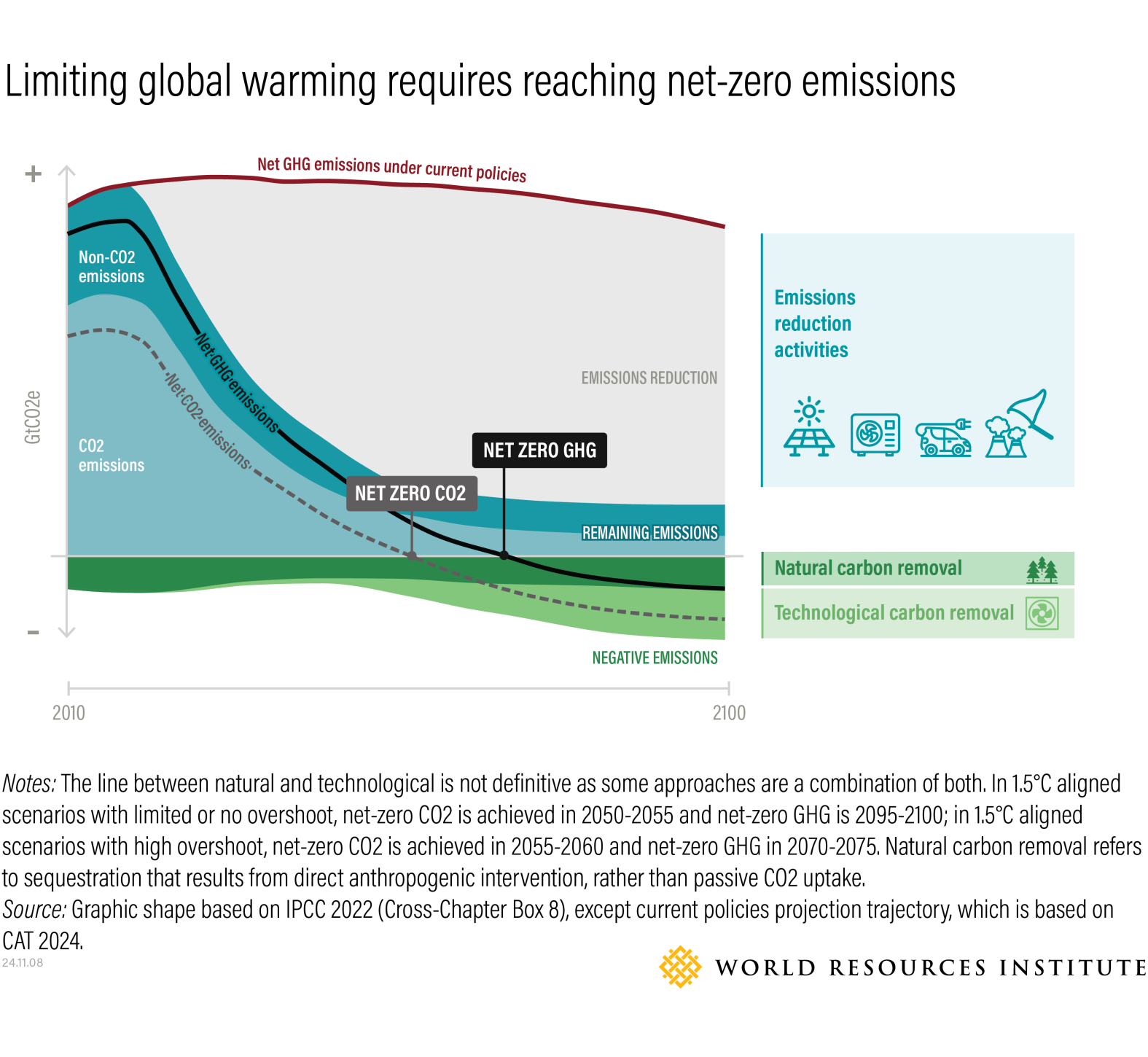
Carbon removal technologies are emerging as an important component of corporate Net Zero strategies. Climate research indicates that limiting global warming requires not only reducing emissions but also removing carbon dioxide already present in the atmosphere. Carbon removal approaches therefore complement emissions reductions by capturing CO2 from the atmosphere and storing it in plants, soils, oceans, geological formations, or durable products.
Key takeaways
- Carbon removal technologies capture carbon dioxide from the atmosphere and store it in biological systems, oceans, geological formations, or durable materials.
- The World Resources Institute identifies six major carbon removal approaches: forests, soils, bioenergy with carbon capture and storage, direct air capture, ocean-based approaches, and enhanced weathering.
- Nature-based solutions are currently more widely deployed, while engineered removals offer higher durability but remain earlier in development.
- Companies are beginning to integrate carbon removal into ESG strategies through nature-based projects and investments in engineered technologies.
- Technology maturity, infrastructure requirements, and verification systems remain key challenges when deploying carbon removal at scale.
Why Are Companies Turning to Carbon Removal to Achieve Net Zero?
Climate mitigation research increasingly recognizes the role of carbon removal in achieving long‑term climate goals. Carbon removal approaches capture carbon dioxide from the atmosphere and store it in plants, soils, oceans, geological formations, or long‑lasting materials. These approaches complement emissions reductions because even deep decarbonization may leave residual emissions that must be balanced by removing carbon from the atmosphere.
For companies pursuing Net Zero targets, this creates a strategic challenge. Organizations must prioritize emissions reductions across Scope 1, Scope 2, and Scope 3 emissions while evaluating how carbon removal may support long‑term climate commitments once mitigation options are exhausted.
Types of Carbon Removal Technologies Companies Should Understand
Carbon removal technologies generally fall into two broad groups: nature‑based approaches and engineered approaches. Nature‑based approaches rely on biological systems such as forests or agricultural soils to absorb and store carbon dioxide. Engineered approaches use industrial processes to capture carbon dioxide and store it underground or in stable materials.
Each approach differs in durability, scalability, cost, and technological maturity. Understanding these differences helps companies evaluate how carbon removal could support long‑term climate strategies.
Nature‑Based Carbon Removal
Nature‑based carbon removal relies on ecosystems that naturally absorb carbon dioxide through biological processes. Trees remove carbon dioxide from the atmosphere through photosynthesis and store carbon in biomass and soils. Forests and soils therefore act as natural carbon sinks that store carbon removed from the atmosphere.
Engineered Carbon Removal Technologies
Engineered carbon removal technologies capture carbon dioxide through industrial systems and store it in geological formations or stable materials. These approaches include direct air capture, bioenergy with carbon capture and storage, and mineralization.
Many engineered approaches remain in earlier stages of development compared with ecosystem‑based approaches, and their deployment often requires new infrastructure for capturing, transporting, and storing carbon dioxide.
Major Carbon Removal Approaches Explained
The World Resources Institute groups carbon removal into six categories: forests, soils, bioenergy with carbon capture and storage (BECCS), direct air capture (DAC), ocean‑based approaches, and enhanced weathering and mineralization. Each approach differs in how carbon is captured, how long it remains stored, and how easily the approach can scale.
Understanding these approaches helps corporate decision makers evaluate how different technologies may support long‑term climate strategies.
| Approach | Removal Mechanism | Carbon Storage Form |
|---|---|---|
| Forests | Trees and forests remove carbon dioxide from the atmosphere through photosynthesis. | Biomass and soils |
| Soils | Improving soil management practices can increase the amount of carbon stored in agricultural soils. | Agricultural soils |
| Bioenergy with Carbon Capture and Storage | Bioenergy carbon capture and storage involves generating energy using biomass and capturing the resulting CO2 emissions. | Captured CO2 emissions |
| Direct Air Capture | Direct air capture is the process of chemically scrubbing carbon dioxide from the ambient air and storing it. | Stored carbon dioxide |
| Ocean-based Carbon Removal | Each marine carbon removal approach aims to accelerate natural carbon cycles in the ocean. | Ocean |
| Enhanced Weathering | Some minerals naturally react with CO2, turning carbon dioxide from a gas into a solid and keeping it out of the atmosphere permanently. | Solid |
Forests
Forests remove carbon dioxide from the atmosphere through photosynthesis and store carbon in trees, vegetation, and soils. Restoring forests and other ecosystems can increase the amount of carbon stored on land while also supporting biodiversity and watershed protection. Research indicates that forest‑based carbon removal approaches can be relatively inexpensive compared with other removal options, generally costing less than $50 per metric ton of CO2 while also improving air and water quality.
Because forests store carbon in biological systems, long‑term management and protection are necessary to ensure that the stored carbon remains in ecosystems.
Soil Carbon Sequestration
Improving soil management practices can increase the amount of carbon stored in agricultural soils. When plants grow, they absorb carbon dioxide from the atmosphere and transfer some of that carbon into the soil through roots and organic matter. Practices that increase soil organic matter therefore allow soils to store more carbon over time.
Because agricultural land is widely distributed across global supply chains, soil carbon storage is often discussed in the context of agriculture and food systems. Companies with agricultural value chains therefore monitor developments in soil carbon programs as part of broader climate mitigation strategies.
Bioenergy with Carbon Capture and Storage (BECCS)
Bioenergy with carbon capture and storage removes carbon dioxide by capturing emissions produced when biomass is used for energy. Plants absorb carbon dioxide from the atmosphere while they grow through photosynthesis. When the biomass is later burned to produce electricity or fuels, the resulting CO2 can be captured before it enters the atmosphere and stored underground in geological formations.
This approach combines energy production with carbon removal because the carbon originally came from the atmosphere during plant growth. Capturing and storing those emissions can therefore result in net removal of carbon dioxide while still generating power or fuels.
Direct Air Capture (DAC)
Direct air capture systems remove carbon dioxide directly from ambient air using chemical processes. Direct air capture is the process of chemically scrubbing carbon dioxide from the ambient air and storing it. The captured carbon dioxide is then separated, compressed, and transported to sites where it can be permanently stored underground.
Direct air capture can remove CO2 regardless of where emissions originally occurred because the technology pulls carbon directly from the atmosphere. The captured carbon dioxide can then be stored to keep it out of the atmosphere.
Ocean‑Based Carbon Removal
Oceans already play a major role in the global carbon cycle by naturally absorbing carbon dioxide from the atmosphere. Some carbon removal approaches aim to enhance these natural processes. Potential approaches can include adding certain minerals to seawater that react with dissolved CO2 and help lock it away.
Other approaches focus on marine ecosystems often referred to as “blue carbon” systems. Mangroves, salt marshes, and seagrasses capture carbon through photosynthesis and store significant amounts of carbon in coastal sediments for long periods. These approaches are currently being researched and tested to better understand their scalability and environmental impacts.
Mineralization and Enhanced Weathering
Mineralization removes carbon dioxide by reacting it with certain minerals to form stable carbonates. This process mimics natural chemical weathering reactions that occur when CO2 reacts with rocks over long geological timescales.
Enhanced weathering accelerates this natural process by spreading finely ground silicate or carbonate rocks across land surfaces. Some minerals naturally react with CO2, turning carbon dioxide from a gas into a solid and keeping it out of the atmosphere permanently.

How Are Major Companies Integrating Carbon Removal into ESG Strategy?
Corporate interest in carbon removal has increased as companies pursue long‑term climate commitments. Several companies have begun supporting carbon removal initiatives through procurement agreements and climate investments.
These initiatives illustrate how carbon removal technologies are beginning to move from research and pilot projects toward implementation within corporate climate strategies.
Supporting Nature‑Based Carbon Removal Projects
Some companies are prioritizing nature‑based carbon removal projects, particularly those connected to agricultural or land‑based ecosystems. For example, Microsoft has signed agreements to purchase carbon removal from projects involving soil carbon sequestration. Boeing has also announced agreements supporting biochar‑based carbon removal initiatives. These projects rely on biological systems to capture and store carbon and can often be deployed earlier than engineered solutions.
Investing in Engineered Carbon Removal Technologies
Other companies are supporting engineered carbon removal technologies that aim to deliver more durable carbon storage. Google has signed an agreement supporting an ocean‑based carbon removal project, while Microsoft has also supported projects involving mineralization technologies. LEGO has invested in carbon removal initiatives through climate investment partnerships. These efforts focus on accelerating the development and commercialization of emerging carbon removal technologies.
What Strategic Challenges Do Companies Face When Deploying Carbon Removal?
Deploying carbon removal technologies at scale presents several challenges for corporate climate strategies. These include technology readiness, the availability of projects capable of delivering verified carbon removal, and the development of monitoring and certification systems.
- Technology Maturity
Many carbon removal technologies remain in early stages of development and are still being evaluated through research and pilot deployments. As a result, companies face uncertainty around technology readiness, long‑term performance, and the pace at which different approaches can scale. In some cases, organizations may need to support early deployments or enter long‑term offtake agreements before large commercial markets for carbon removal are fully established. - Cost and Infrastructure Requirements
Cost and infrastructure requirements are another major challenge. Some engineered carbon removal approaches require systems to capture carbon dioxide, transport it, and store it safely underground. For example, bioenergy with carbon capture and storage captures emissions from biomass energy facilities and stores the resulting CO2, while direct air capture chemically removes carbon dioxide from the air before it is transported for storage.
Developing the infrastructure needed to capture, transport, and store carbon dioxide at scale can require significant investment and coordination across energy, industrial, and geological storage systems. - Monitoring and Verification
Carbon removal projects must demonstrate that carbon dioxide has actually been removed from the atmosphere and stored durably. According to the European Commission, carbon removals must be “measurable, reported and verified” in order to ensure they represent real and long‑term climate benefits.
Establishing reliable monitoring, reporting, and verification systems is therefore essential. Without credible verification frameworks, companies risk overstating climate progress or facing scrutiny from regulators, investors, and stakeholders.
Building a Carbon Removal Portfolio for Corporate Climate Strategy
Organizations evaluating carbon removal strategies often consider multiple approaches because technologies differ in cost, scalability, and storage durability. Combining ecosystem‑based approaches with emerging engineered technologies can help companies evaluate how carbon removal may support long‑term climate targets.
Developing a carbon removal strategy also requires accurate measurement of emissions and mitigation progress. Platforms such as ASUENE support organizations by measuring emissions across Scope 1, Scope 2, and Scope 3 while enabling data‑driven climate strategy development.
Frequently Asked Questions
What is carbon removal and how is it different from emissions reduction?
Carbon removal refers to processes that remove carbon dioxide directly from the atmosphere and store it in natural systems, geological formations, or durable materials. Emissions reduction focuses on lowering the amount of greenhouse gases released. Carbon removal complements reductions by addressing residual emissions that cannot be eliminated through operational changes.
Why is carbon removal necessary for achieving net-zero emissions?
Net-zero targets require balancing remaining greenhouse gas emissions with an equivalent amount of carbon removed from the atmosphere. Even with aggressive decarbonization across energy, industry, and supply chains, some emissions remain difficult to eliminate. Carbon removal technologies and nature-based solutions help neutralize these residual emissions.
What are the main types of carbon removal technologies?
Carbon removal approaches generally fall into two categories. Nature-based solutions include forests, soil carbon sequestration, and coastal ecosystems that store carbon biologically. Engineered approaches include direct air capture, bioenergy with carbon capture and storage, and mineralization technologies that convert carbon dioxide into stable compounds.
What challenges do companies face when investing in carbon removal?
Companies face several challenges when deploying carbon removal strategies. Many technologies are still developing and require further testing and scaling. Infrastructure for capturing, transporting, and storing carbon dioxide can be costly, and credible monitoring and verification systems are needed to ensure that removals are measurable and durable.
Conclusion
Carbon removal technologies are becoming an increasingly important component of global climate mitigation strategies. While emissions reductions remain the primary priority, carbon removal approaches provide a pathway to address emissions that cannot yet be eliminated.
Understanding the major carbon removal technologies, their mechanisms, and their deployment challenges is therefore essential for organizations developing credible Net Zero strategies.
Executives responsible for ESG strategy should begin evaluating carbon removal technologies alongside emissions reduction initiatives while strengthening carbon accounting systems and climate governance frameworks.
Sources
- World Resources Institute – 6 Ways to Remove Carbon Pollution from the Sky
- European Commission – Carbon Removals and Carbon Farming
- Microsoft – Carbon Removal Program
- Google – Our Progress to Accelerate Carbon Removal Solutions
- LEGO – Carbon Removal Solutions
- ESG Today – Boeing Signs 40,000 Tonne Biochar Carbon Removal Agreement
Why Work with ASUENE Inc.?

ASUENE is a key player in carbon accounting, offering a comprehensive platform that measures, reduces, and reports emissions, including Scope 1-3. ASUENE serves over 10,000 clients worldwide, providing an all-in-one solution that integrates GHG accounting, ESG supply chain management, a Carbon Credit exchange platform, and third-party verification.
ASUENE supports companies in achieving net-zero goals through advanced technology, consulting services, and an extensive network.