
- Article Summary
-
Introduction
Air pollutants are becoming a critical topic in corporate ESG strategy because companies increasingly face pressure to measure, manage, and disclose emissions that affect air quality and human health. Regulations such as the Corporate Sustainability Reporting Directive and the European Sustainability Reporting Standards now require organizations to evaluate pollution impacts alongside climate risks. ESG leaders must understand how air pollutant data, regulations, and reduction strategies shape corporate environmental governance.
Key Takeaways
- A Global Reporting Initiative analysis of 1,000 companies shows that although 91% publish sustainability reports, fewer than 40% mention specific air pollutants and less than one third disclose quantitative emissions data.
- The European Sustainability Reporting Standards require disclosure of material pollutants emitted through operations.
- Air pollutants such as nitrogen oxides, sulfur oxides, and particulate matter are commonly tracked in corporate environmental reporting.
- Effective ESG strategies require companies to align pollution data from operations with corporate sustainability reporting.
What Are Air Pollutants Companies Must Track?
An air pollutant is a substance released into the atmosphere that can harm human health, ecosystems, or environmental quality. According to the Stockholm Environment Institute and the Climate and Clean Air Coalition guide on business air pollutant emission assessment, air pollutant emissions refer to pollutants discharged into the atmosphere from activities such as combustion, industrial processes, transportation, and energy production.
Air pollutants generally include nitrogen oxides (NOx), sulfur oxides (SOx), particulate matter (PM), volatile organic compounds (VOCs), and ammonia (NH3). These pollutants commonly originate from combustion processes, industrial manufacturing, energy production, and transportation activities. Corporate sustainability reporting often focuses on pollutants associated with significant environmental impacts or regulatory monitoring requirements.
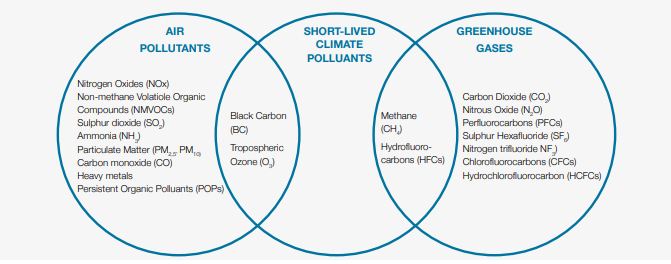
Research from the Global Reporting Initiative shows that nitrogen oxides and sulfur oxides are the pollutants most frequently disclosed in corporate sustainability reports across the 1,000 companies analyzed, reflecting the fact that these emissions are widely monitored under environmental regulation. Other pollutants such as particulate matter and volatile organic compounds appear less consistently in disclosures, reflecting differences in monitoring systems and reporting practices.
Why Air Pollutant Disclosure Is Becoming an ESG Priority
The Global Reporting Initiative analyzed sustainability disclosures from 1,000 companies and found a significant gap between narrative discussion and quantitative reporting. Although 91% of companies publish sustainability reports, fewer than 40% mention specific air pollutants and less than one third disclose quantitative emissions data.
| Pollutant | Percentage of organizations (%) |
|---|---|
| NOx |
Mention 44.2%
Disclosure 30.8%
|
| SOx |
Mention 38.7%
Disclosure 27.9%
|
| PM |
Mention 30.4%
Disclosure 23%
|
| VOC |
Mention 18.7%
Disclosure 10.1%
|
| HAP |
Mention 3.8%
Disclosure 2.2%
|
| POP |
Mention 2.9%
Disclosure 1%
|
For ESG leaders, this issue affects corporate credibility and regulatory preparedness. Investors and regulators increasingly expect environmental claims to be supported by verifiable data. Organizations that lack reliable pollutant measurement systems may face reputational risk and compliance challenges as environmental reporting standards evolve.
| Sector | Nox | Sox | PM | VOC | HAP | POP |
|---|---|---|---|---|---|---|
| Agriculture | 18% | 15% | 15% | 2% | 0% | 0% |
| Chemicals | 42% | 38% | 21% | 27% | 10% | 4% |
| Construction | 24% | 18% | 17% | 6% | 0% | 0% |
| Construction materials | 53% | 42% | 40% | 7% | 2% | 2% |
| Metal processing | 30% | 27% | 23% | 7% | 2% | 0% |
| Mining | 38% | 38% | 31% | 18% | 5% | 4% |
| Pharma | 24% | 21% | 15% | 10% | 0% | 0% |
| Transport | 30% | 23% | 22% | 5% | 0% | 0% |
How CSRD and ESRS Address Air Pollution
The Corporate Sustainability Reporting Directive requires companies within its scope to publish sustainability disclosures using the European Sustainability Reporting Standards. Pollution is addressed under ESRS E2 Pollution, which sets specific disclosure requirements related to pollutants released to air, water, and soil.
Under ESRS E2‑4 Pollution of air, water and soil, companies must disclose the amount of pollutants emitted from their own operations when those pollutants are material. The standard requires disclosure of emissions for substances listed in Annex II of the European Pollutant Release and Transfer Register (E‑PRTR) Regulation, excluding greenhouse gases which are reported under the climate standard ESRS E1.
Companies must also explain the sources of pollution, the processes that generate emissions, and the measures implemented to prevent or reduce pollution. ESRS E2 further requires disclosure of pollution related risks and opportunities, including potential regulatory exposure, environmental remediation obligations, and operational impacts.
In addition, ESRS E2‑6 Anticipated financial effects from pollution related impacts, risks and opportunities requires companies to describe the financial implications of pollution issues. These disclosures can include expected remediation costs, environmental penalties, compliance investments, or other financial impacts associated with pollution management.
By linking pollutant emissions, environmental impacts, and financial consequences within one reporting framework, the CSRD significantly expands ESG disclosure beyond greenhouse gas accounting and requires companies to integrate air pollutant management into broader corporate sustainability governance.

How Companies Should Prepare Air Pollution Data for ESG Disclosure
Companies preparing for pollution disclosure under CSRD and the European Sustainability Reporting Standards must build internal systems that translate operational environmental monitoring into reportable ESG data. This preparation typically begins with identifying emission sources across facilities, including combustion systems, manufacturing processes, transportation fleets, and energy generation activities.
After emission sources are identified, organizations must ensure that monitoring systems capture pollutant quantities that align with pollutants listed under the E‑PRTR framework, such as nitrogen oxides (NOx), sulfur oxides (SOx), particulate matter (PM), volatile organic compounds (VOCs), and ammonia (NH3). These measurements may come from environmental monitoring equipment, engineering estimates, or regulatory reporting systems already used for environmental compliance.
| Pollutant categories referenced under ESRS E2 through the E-PRTR framework |
|---|
| Nitrogen oxides (NOx) |
| Sulfur oxides (SOx) |
| Particulate matter (PM) |
| Volatile organic compounds (VOCs) |
| Ammonia (NH3) |
Companies must then consolidate pollutant data across facilities and ensure consistency between operational environmental reports and corporate sustainability disclosures. ESG teams, environmental health and safety departments, and operations managers often collaborate to verify data quality and confirm that emissions figures used in sustainability reports match underlying environmental records.
Establishing clear internal governance for pollution data is also important. Companies often define responsibilities for pollutant measurement, verification, and disclosure to ensure that environmental data reported under CSRD reflects accurate operational performance and regulatory compliance.
How Air Pollutant Management Fits into ESG Strategy
Air pollutant management is increasingly integrated into corporate ESG strategy because pollution data connects environmental performance, regulatory compliance, and operational decision making. Once companies establish reliable emission inventories, that information becomes a foundation for broader environmental governance and strategic planning.
Guidance from the Climate and Clean Air Coalition and the Stockholm Environment Institute emphasizes that emission inventories allow companies to understand where pollutants originate across operations. These inventories typically cover pollutants such as nitrogen oxides (NOx), sulfur oxides (SOx), particulate matter (PM), volatile organic compounds (VOCs), and ammonia (NH3) generated from combustion processes, industrial activities, transportation, and energy production.
Within ESG strategy, pollution data supports several management functions. Companies use emission inventories to prioritize environmental risks, evaluate compliance obligations, and identify facilities or processes that produce the largest environmental impacts. This information can inform environmental targets, capital investment planning, and operational improvement initiatives.
Pollution management strategies may include actions such as upgrading industrial equipment, improving fuel efficiency, adopting emission control technologies, or redesigning processes that generate high pollutant outputs. These measures are typically implemented through environmental management systems or facility level compliance programs.
By linking pollutant measurement, regulatory disclosure, and operational improvement, companies can integrate air pollutant management into broader ESG governance. This approach ensures that pollution data collected for reporting purposes also supports long term environmental strategy and risk management.
of Air Pollution Emission Inventory
What Business Impact Comes From Managing Air Pollutants?
Pollution disclosure also influences stakeholder confidence. Investors, regulators, and communities increasingly expect companies to provide transparent environmental data. Organizations that maintain reliable pollutant reporting systems are better positioned to respond to evolving regulatory expectations.
Strong pollution management can also support long term ESG strategy development. Understanding emission sources and environmental impacts allows companies to design targeted mitigation initiatives and improve environmental performance across operations.
Conclusion
Organizations that develop strong pollution data systems and integrate environmental monitoring into ESG governance will be better prepared for evolving disclosure requirements. Executive leadership should prioritize pollutant measurement, transparency, and reduction initiatives as part of broader sustainability strategy development.
FAQs
What are the most common air pollutants companies report?
The pollutants most commonly reported in corporate sustainability disclosures are nitrogen oxides (NOx), sulfur oxides (SOx), particulate matter (PM), volatile organic compounds (VOCs), and ammonia (NH3). Research from the Global Reporting Initiative shows that NOx and SOx appear most frequently in company reports because these emissions are widely monitored under environmental regulation.
Why are air pollutants becoming important in ESG reporting?
Air pollutants are gaining attention in ESG reporting because stakeholders increasingly expect companies to disclose environmental impacts beyond greenhouse gas emissions. The Global Reporting Initiative found that although 91% of companies publish sustainability reports, fewer than 40% mention specific air pollutants and less than one third disclose quantitative emissions data.
How does CSRD require companies to disclose air pollution information?
Under the Corporate Sustainability Reporting Directive, companies must follow the European Sustainability Reporting Standards. ESRS E2 Pollution requires companies to disclose material pollutants emitted from their operations and explain related impacts, risks, prevention measures, and potential financial effects.
What data do companies need to prepare for air pollutant disclosure?
Companies need reliable emission inventories covering pollutants such as NOx, SOx, particulate matter, VOCs, and ammonia. These inventories are typically built using facility monitoring systems, engineering estimates, and environmental compliance reporting that measure emissions from combustion processes, industrial activities, transportation, and energy generation.
How does managing air pollutants support ESG strategy?
Managing air pollutants helps companies connect environmental compliance with ESG governance. Accurate pollution data enables organizations to identify environmental risks, improve operational performance, and meet disclosure requirements under frameworks such as the Corporate Sustainability Reporting Directive.
Global Reporting Initiative — The Air Pollution Reporting Gap
European Commission — European Sustainability Reporting Standards (ESRS E2 – Pollution)
European Commission — European Pollutant Release and Transfer Register (E-PRTR)
Climate and Clean Air Coalition & Stockholm Environment Institute — A Practical Guide for Business: Air Pollutant Emission Assessment
Why Work with ASUENE Inc.?

ASUENE is a key player in carbon accounting, offering a comprehensive platform that measures, reduces, and reports emissions. The company serves over 10,000 clients worldwide with an all-in-one solution that integrates GHG accounting, ESG supply chain management, a Carbon Credit exchange platform, and third-party verification.
ASUENE supports companies in achieving net-zero goals through advanced technology, consulting services, and an extensive network.