- Challenge
- Annual CO₂ emissions data collection and aggregation using Excel took approximately four months, creating challenges in meeting annual disclosure deadlines
- Emissions calculation expertise was concentrated among individual staff members, creating a need for a sustainable system that involved domestic and overseas sites and departments
- Data collection was time-consuming, leaving insufficient time for analysis and concrete CO₂ emissions reduction initiatives
- Solution
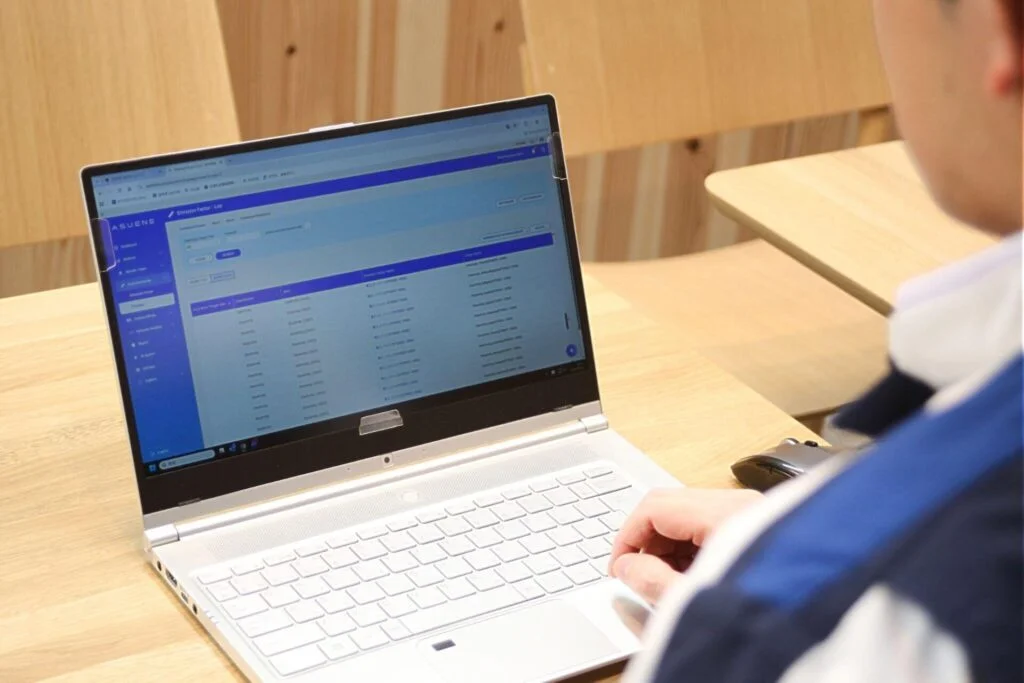
- CO₂ emissions visualization SaaS platform, ASUENE
- Impact
- Establishing a framework to transition from annual aggregation to monthly management, improve calculation efficiency, and accelerate disclosure readiness
- Centralizing data and supporting evidence to enable CO₂ emissions to be tracked while verifying the calculation basis at each site
- Redirecting time spent on emissions calculations toward reduction initiatives and advancing decarbonization in collaboration with business partners
About Suzuki Motor Corporation
- Business overview: Suzuki operates globally in the mobility sector, focusing on automobiles, motorcycles, and outboard motors to support everyday life and work in diverse regions around the world through mobility solutions closely connected to daily life
- Main products: Manufactures and sells automobiles, primarily compact and mini vehicles; motorcycles, including scooters and sport bikes; outboard motors; and electric wheelchairs
- Strengths: Guided by the principle of putting customers first, Suzuki leverages its product development expertise cultivated through compact cars and its community-based business operations to develop and manufacture products that meet the needs of each region
Implementing ASUENE to Accelerate CO₂ Emissions Tracking and Enhance Disclosure in Line with SSBJ Standards
In recent years, addressing climate change has become a key management priority in the automotive industry. Suzuki also needed to strengthen its management framework to track global CO₂ emissions more quickly and accurately and translate the data into emissions reduction activities.
Previously, Suzuki used Excel to collect and aggregate data from sites and subsidiaries in Japan and overseas. Requests for data, collection, and verification were handled manually, requiring considerable effort to consolidate company-wide CO₂ emissions data and organize it for management reporting and disclosure. The process took approximately four months. Another challenge was the concentration of emissions calculation expertise among a limited number of staff members.
In Japan, companies are expected to address sustainability disclosure requirements based on the Sustainability Standards Board of Japan (SSBJ) standards beginning with the fiscal year ending March 2027. Against this backdrop, Suzuki needed a framework to track and manage CO₂ emissions more quickly and continuously than before. The company therefore considered introducing a CO₂ emissions visualization system to systematize data collection, calculation, and verification, establishing an efficient and sustainable operational framework.
Suzuki evaluated several system providers, including ASUENE. The key selection criteria were ease of use for the staff members responsible for entering data at each site and the ability to operate the system globally.
Suzuki places importance on the concept of “Fit to Standard,” which involves standardizing and improving business processes while aligning operations with the system. Accordingly, usability in day-to-day operations was a more important evaluation criterion than an extensive feature set. The user interface and ease of data entry were therefore key considerations.
In addition to its compatibility with Suzuki’s business operations, ASUENE responded quickly to requests. For example, the company received a response regarding the feasibility of a request the day after it was submitted. After a comprehensive evaluation, Suzuki decided to implement ASUENE.
Establishing Monthly Management and Evidence Tracking to Create More Time for Emissions Reduction
Since fiscal 2026, Suzuki has been progressing with the implementation and use of ASUENE, its CO₂ emissions management platform. The company is transitioning from an operating model centered on collecting and aggregating data once a year for company-wide reporting to one in which staff at each site enter and verify data monthly. This initiative is laying the foundation for sustainability disclosures and potential third-party assurance in the future.
Previously, Suzuki collected the data required for company-wide aggregation from each site at the end of the fiscal year, then aggregated and verified the information. By accumulating data monthly, the company aims to reduce the concentrated workload at fiscal year-end and establish an environment where global emissions and progress toward reduction targets can be monitored more promptly.
Suzuki is also developing an environment in which CO₂ emissions data can be managed alongside supporting evidence, such as invoices and transaction slips. Previously, verification focused primarily on sites with high emissions. Going forward, the company expects to make it easier to understand emissions data and verify its calculation basis, including at relatively small sites. By accumulating data and supporting evidence on a shared platform, Suzuki also intends to strengthen its readiness for potential third-party assurance.
In addition, Suzuki expects that regular engagement with CO₂ emissions data at each site will improve employees’ understanding of carbon neutrality and encourage more proactive action.
Suzuki emphasizes that “calculation itself should not be the objective.” By making emissions management more efficient, the company aims to allocate more time to analysis, consideration of reduction measures, and dialogue with business partners.
One principle Suzuki has long valued is “mutual prosperity.” The company’s business has grown alongside local businesses, including suppliers that support manufacturing operations and dealerships throughout Japan. However, many business partners face challenges in determining how to calculate emissions and establish reduction targets.
Suzuki will therefore work closely with its business partners, in collaboration with the procurement department and ASUENE, to advance emissions reduction throughout the supply chain. The company also hopes its environmental initiatives will encourage local businesses in Hamamatsu, where Suzuki is headquartered, to consider decarbonization.
In addition to engaging with its supply chain, Suzuki will steadily reduce its own CO₂ emissions from Scope 1 and Scope 2 sources through energy conservation and energy transition initiatives.
For Scope 3 Category 11, which covers the use of sold products and represents a significant source of emissions, Suzuki follows a “multi-pathway” approach. This involves combining multiple options, including battery electric vehicles (BEVs), hybrid vehicles, and biofuels, while considering energy conditions and customer needs in each country and region. By providing products and technologies suited to local circumstances, Suzuki aims to achieve both business growth and decarbonization.
Under the Suzuki Environmental Plan 2030, the company has set targets to reduce CO₂ emissions from its business activities by 42% from fiscal 2022 levels by fiscal 2030 and achieve carbon neutrality at its domestic factories by 2035.
Suzuki also applies the manufacturing philosophy of “Small, Fewer, Lighter, Shorter, and Neater” to sustainability. The aim is to maximize value for customers while minimizing the use of resources and energy, as well as CO₂ emissions, wherever possible. Working toward these goals together with employees, business partners, dealerships, local communities, and customers, Suzuki seeks to contribute to a sustainable society based on mutual prosperity.
What Makes Suzuki Motor Corporation Distinctive
At the heart of Suzuki’s business is the question of what customers need, rather than what the company itself wants to make. Guided by its corporate motto and operating principles, Suzuki values customer-oriented manufacturing and the philosophy of “Small, Fewer, Lighter, Shorter, and Neater,” providing mobility solutions tailored to customers around the world.
This philosophy also underpins Suzuki’s environmental initiatives. Delivering value to customers while minimizing the use of limited resources and energy is consistent with the manufacturing principles the company has upheld for many years.
In addressing decarbonization, Suzuki aims to contribute to a sustainable society not only through its own efforts but also in collaboration with business partners, dealerships, and local communities, guided by the principle of mutual prosperity.
This philosophy extends directly to environmental stewardship. Utilizing finite resources and energy with minimal waste while delivering value reflects the manufacturing approach the organization has practiced for decades. In addressing decarbonization, management aims to realize a sustainable society founded on co-prosperity alongside suppliers, dealerships, and regional communities.
Suzuki Motor Corporation
Type of Business: Transportation Equipment Manufacturing
Address: Hamamatsu City, Shizuoka Prefecture
Number of employees: 17,871 (non-consolidated, as of the end of March 2026)